
Orlando Landscape Design: What I Notice First When I Visit a Property
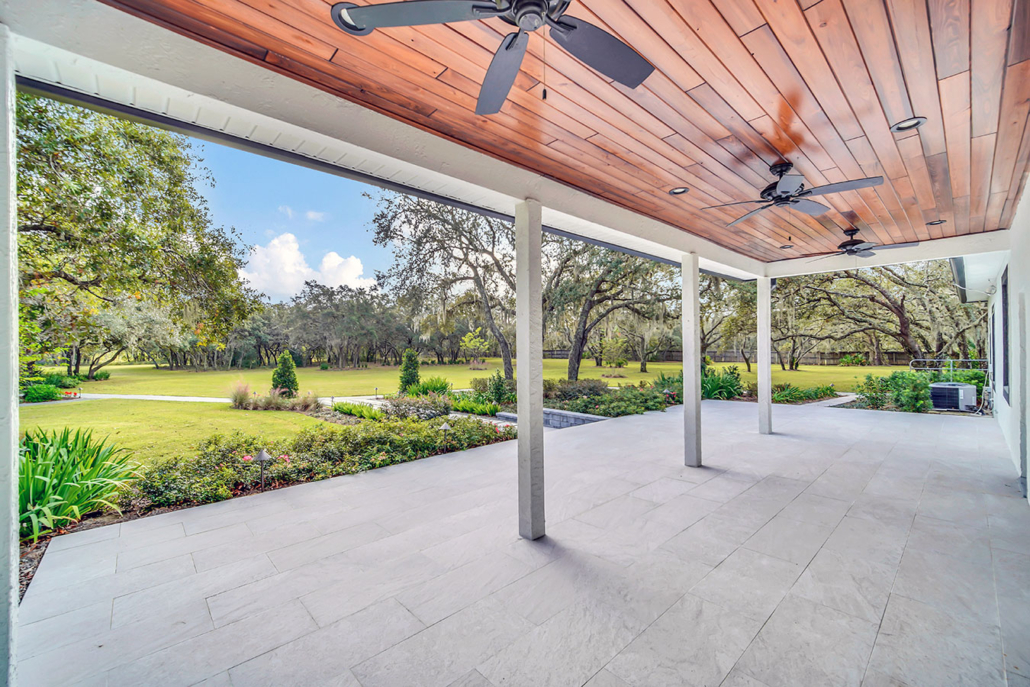
When it comes to Orlando landscape design, when I first visit a property I am rarely thinking about specific plants or materials.
I am trying to understand the property as a whole.
Throughout Orlando and communities such as Winter Park, Windermere, Lake Mary, and Heathrow, I encounter properties with different architectural styles, landscapes, and outdoor living environments. Some are established estates with mature trees and extensive landscaping. Others are newer homes where the outdoor environment has yet to develop a clear sense of identity.
One of the first things I notice is how the house sits on the lot in relation to everything around it—the landscape, driveway, mature trees, open space, and surrounding environment.
Before making any design decisions, I want to understand whether the property feels balanced and whether the different elements relate well to one another.
That first impression usually tells me a lot about where the opportunities are.
I Look at Scale and Proportion
Scale is one of the first things I notice.
Sometimes a large home is surrounded by landscaping that feels too small or too close to the structure. Planting beds may be pushed tightly against the house without enough depth, or the landscape may feel disconnected from the architecture.
In other situations, there may be too much lawn or not enough open space.
When I approach landscape design in Orlando, I want the result to feel proportional to the home and the property. The landscape should support the architecture rather than compete with it or disappear beside it.
I look at whether planting areas need more depth, whether larger trees or stronger landscape structure would better complement the architecture, and how the balance between planted and open spaces could be improved.
The goal is not simply to fill empty spaces. It is to establish the right relationship between the home and its surroundings.
I Pay Attention to What Is Already There
Mature trees immediately affect how I look at a property.
They influence shade, views, plant selection, circulation, and the overall feeling of the landscape. They can also give a property a sense of maturity that cannot simply be recreated overnight.
That is why I rarely begin with the assumption that everything needs to be removed.
Part of good design is understanding what should remain, what can be improved, and what may be preventing the property from reaching its potential.
Sometimes preserving one beautiful tree and redesigning around it can have more impact than replacing an entire area.
An established tree may determine where a walkway belongs, how an outdoor living area is positioned, or which views should be emphasized. Rather than treating it as an obstacle, I consider how it might become part of the design.
I Think About How People Move Through the Property
Function is just as important as appearance.
I naturally look at parking, the arrival experience, circulation, and how someone moves from one part of the property to another.
Does the front entrance feel welcoming?
Is there a clear and comfortable connection from the house to the backyard or pool?
Do walkways, outdoor living spaces, and gathering areas feel intentional, or do they feel like they were added one at a time?
These are all things that influence how a property feels, even if people cannot always identify exactly why something seems disconnected.
I also want to understand how the homeowner uses the property. A family that entertains frequently may need different connections between outdoor spaces than someone who values privacy and quiet areas for relaxation.
Good circulation should feel natural. The design should support the way people actually live rather than require them to adapt to an inconvenient layout.
I Am Already Thinking About the Property at Night
Lighting is another thing I notice almost immediately because it can completely change the experience of a property after dark.
I think about which trees or architectural elements could become focal points, how someone moves through the property at night, and what the view might look like from inside the home.
Lighting should not feel like something added at the end.
It can influence how the landscape is designed from the beginning and help create a completely different experience once the sun goes down.
A beautiful tree may become a nighttime focal point, while thoughtfully placed lighting can make walkways and outdoor gathering areas more comfortable to use after dark.
I want the nighttime experience to feel as intentional as the landscape does during the day.
I Am Looking for the Overall Flow
Ultimately, what I am trying to understand is whether everything feels connected.
The strongest landscapes are not simply collections of beautiful plants, trees, materials, and outdoor spaces.
They have rhythm and balance.
The architecture, landscape, hardscape, lighting, and open areas should support one another. Nothing should feel isolated or added without a reason.
That is the perspective I bring to every Orlando landscape design project before I begin selecting specific plant varieties or materials.
The goal is to understand the property first.
Once that is clear, the design decisions become much more intentional.
Take Another Look at Your Property
Sometimes the biggest opportunities are not obvious until you step back and look at the property as a whole.
Consider the scale, mature trees, circulation, views, lighting, and how each part of the property relates to the next. Those relationships often have more impact on the finished result than any individual plant or material.
Whether you are considering a complete landscape transformation or improvements to an established property, understanding what already exists is an important first step.
Schedule a private design consultation. Let’s explore the options and create a plan that fits your vision.

Robert Burns, FCLD
Founder & Lead Designer
BLG Environmental Services
FNGLA Certified Landscape Designer
Orlando, Florida
With over 20 years of experience in Orlando luxury landscaping and outdoor living design, Robert combines artistry, environmental insight, and experience to create outdoor spaces that feel timeless, intentional, and uniquely tailored to each client. His design philosophy emphasizes thoughtful integration, longevity, and understated elegance.







Leave a Reply
Want to join the discussion?Feel free to contribute!