
Why Beautiful Properties Still Feel Incomplete
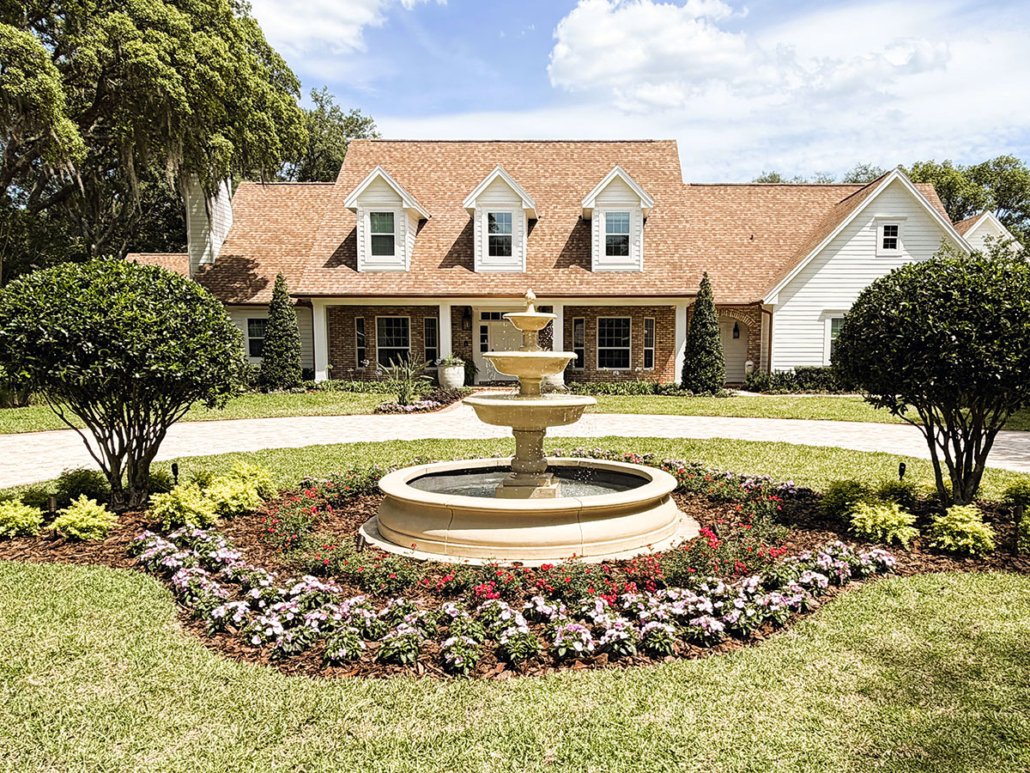
A beautiful home in the Orlando area can have an impressive pool, extensive hardscaping, mature landscaping, outdoor living spaces, and landscape lighting—and still feel like something is missing.
I see this on established properties throughout Orlando and communities such as Winter Park, Windermere, Lake Mary, and Heathrow. Homeowners may have invested significantly in their outdoor environment over many years. The individual improvements may even be beautiful on their own. But when those improvements were designed and completed separately, the property as a whole may never develop the sense of balance and cohesion the homeowner expected.
In most cases, the problem isn’t that one element is wrong.
It’s that the individual elements were never designed to work together.
A Property Can Have Everything and Still Feel Unfinished
It is common for homeowners to invest heavily in one area of a property at a time.
The pool may have been built first. A patio or outdoor living area came later. Landscaping may have been installed around what already existed. Landscape lighting was added several years after that. Privacy became more important as the property or surrounding neighborhood changed.
Each project may have solved an immediate need.
Over time, however, those individual decisions can create an outdoor environment without a clear property-wide plan.
Sometimes the hardscape is impressive, but the landscaping is undersized and lacks the scale needed to complement the home. On another property, the landscaping may be beautiful while an older patio or hardscape no longer relates well to the architecture or newer improvements.
The property doesn’t necessarily need more.
It needs the elements that are already there to make sense together.
The Problem With Improving a Property One Project at a Time
There is nothing inherently wrong with completing outdoor improvements in phases. For many homeowners, that is the practical way a property evolves.
Phasing isn’t the problem. Phasing without an overall plan is.
Different contractors may each perform quality work within their specialty. A pool contractor builds a beautiful pool. A hardscape contractor installs a well-built patio. Landscaping is added later. Someone else handles lighting.
Individually, each project may be successful.
But if no one is responsible for coordinating the entire vision, the property can gradually become visually busy. Materials, styles, finishes, planting choices, and outdoor features begin competing with one another instead of supporting one another.
What results can be a collection of nice individual features that never quite feels cohesive or complete.
A cohesive outdoor environment considers circulation, sightlines, materials, outdoor living areas, and future improvements as parts of the same design.
For homeowners planning a major new phase, a master plan before building a pool can account for circulation, planting, privacy, hardscape, and future outdoor living needs before construction begins.
The Signs Are Often Visible—Even When You Can’t Explain Them
Homeowners frequently tell me that something about their property “just doesn’t feel right.”
They may not be able to identify exactly why, but there are often visual and functional clues.
Too many different materials, styles, and finishes may compete for attention. There may be no clear focal point or hierarchy within the landscape. Transitions between the pool, patio, lawn, gardens, and other outdoor spaces may feel abrupt.
Walkways may provide access without naturally guiding people through the property. Landscape lighting may illuminate individual features but feel like it was added as an afterthought. Privacy may never have been incorporated into the overall design, leaving otherwise beautiful spaces feeling exposed.
Even the views from inside the home can be overlooked.
A landscape isn’t experienced only while you’re standing outside. Primary sightlines through windows and doors, the relationship between interior rooms and outdoor focal points, and the way the property reveals itself from different areas of the home all influence whether the environment feels intentional.
These are subtle issues individually.
Together, they can be the reason an expensive property still feels incomplete.
Small Properties and Estate Properties Have Different Challenges
Cohesion matters regardless of property size, but the design challenge changes with scale.
On smaller properties, there is very little room for error. Every element has to work together. Too many competing ideas can quickly make a backyard feel cluttered or disconnected.
On larger estate properties, the opposite problem often occurs. The amount of space can feel overwhelming, and homeowners may not know where to begin or which improvement will have the greatest impact.
In both situations, what homeowners are usually looking for is someone who can see beyond the next project and understand how the entire outdoor environment should work together.
Scale Matters More Than Simply Adding More Landscaping
One of the issues I see on larger homes is plant material that doesn’t match the scale of the architecture.
A large residence and an impressive pool can still feel sparse when the trees and plant material are too small to provide the necessary visual weight.
The answer isn’t necessarily filling every available space with more plants.
Often, less is more.
Fewer, more mature trees and carefully selected plantings can create a stronger statement than filling a landscape with smaller material. The goal is balance—allowing the landscaping to soften hardscape, complement the architecture, create privacy where needed, and give the property the appropriate sense of scale.
That relationship becomes especially noticeable around a pool, where pool landscaping, decking, lighting, architecture, and adjoining outdoor spaces must work together.
The same principle works in reverse. Extensive hardscape can dominate an outdoor environment when there isn’t enough landscape structure to soften and connect it to the home and surrounding property.
A Truly Integrated Landscape Has a Sense of Purpose
What separates a collection of attractive outdoor features from a truly integrated landscape is not the number of features.
It is the relationship between them.
The landscape, hardscape, lighting, materials, colors, textures, and layout should complement one another rather than compete for attention.
Your eye should move naturally through the property from one area to another. Certain views should be emphasized while others may need to be screened. Outdoor spaces should connect naturally while still having their own purpose.
The design should also complement the architecture of the home and the character of the surrounding environment rather than simply follow current trends.
A successful property doesn’t call attention to every individual design decision.
It feels as though everything belongs.
An Existing Landscape Doesn’t Always Need to Be Replaced
When an established property feels disconnected, homeowners sometimes assume the answer is to start over.
That is not always necessary.
In many cases, the better approach is to identify what already works, preserve it, and improve the relationships between the landscaping, hardscape, lighting, privacy, circulation, and existing outdoor spaces.
The goal is not change for the sake of change.
It is refinement.
That may mean strengthening areas that are out of scale, correcting poor transitions, improving sightlines, updating older materials, or adding elements that help existing features work together more naturally.
A Lakefront Estate That Had Everything—Except Cohesion
One Orlando-area project that stands out was a large lakefront estate where nothing was technically wrong with the property.
The landscaping had already been installed, and the home had significant outdoor features. But the property lacked cohesion and purpose.
Some of the plant selections didn’t make sense for the site conditions or the architecture. There wasn’t a consistent structure connecting the different areas of the property, and privacy had not been approached as part of an overall design.
Rather than starting over, we refined and integrated what was already there.
One of the first priorities was strengthening the views from inside the home. We focused on the primary sightlines and emphasized the lake as the natural focal point of the property.
From there, we added structure, privacy, and seasonal color. We expanded the hardscape to better connect the cabana, incorporated synthetic turf where it made sense, and significantly enhanced the landscape lighting.
The biggest transformation wasn’t simply what we added.
It was how the property was experienced.
The views from inside the home became stronger. The arrival experience became more intentional. Entertaining areas felt connected. The outdoor environment became more comfortable and private.
The individual improvements finally became part of one property.
Before Starting the Next Outdoor Project, Look at the Entire Property
If your home already has a pool, patio, landscaping, lighting, or other significant outdoor improvements, the next question shouldn’t automatically be:
What should we add next?
A better question may be:
What is keeping everything we already have from feeling complete?
Sometimes that means strengthening landscaping that is out of scale with the home. Sometimes it means improving privacy, circulation, sightlines, lighting, or transitions between existing spaces. Sometimes an older feature needs to be refined so that it relates better to newer improvements.
And sometimes the most important decision is simply establishing an overall vision before another individual project begins.
This is the thinking behind Estate Landscape Enhancement—evaluating an established property as a complete outdoor environment and determining how existing elements can be refined, integrated, and enhanced rather than assuming everything needs to be replaced.
For homeowners with established or estate properties, that property-wide perspective can reveal opportunities that aren’t obvious when looking at one project at a time.
Frequently Asked Questions About Incomplete and Disconnected Landscapes
Q: Why can an expensive landscape still feel incomplete?
A property can include a beautiful pool, patio, landscaping, lighting, and other high-quality improvements yet still feel incomplete when those elements were designed separately. The issue is often not the quality of any individual feature, but the lack of an overall vision connecting the landscape, hardscape, architecture, sightlines, materials, and outdoor living spaces.
Q: Does an existing landscape need to be completely replaced to improve it?
No. Many established properties can be improved by identifying what already works and refining the relationships between existing elements. Landscaping, hardscape, lighting, privacy, circulation, and sightlines can often be adjusted or enhanced without starting over. The goal is to create greater balance and cohesion while preserving features that continue to serve the property well.
Q: Why can completing outdoor projects in phases make a property feel disconnected?
Completing a property in phases is not necessarily a problem. Difficulties arise when each phase is planned independently without considering how it will relate to existing features and future improvements. An overall plan can help pools, patios, landscaping, lighting, privacy, and outdoor living areas develop as parts of one cohesive environment rather than a collection of separate projects.
Q: What makes landscaping feel cohesive with a home?
A cohesive landscape complements the scale and architecture of the home while creating natural relationships between planting, hardscape, lighting, materials, colors, textures, and outdoor spaces. Sightlines, transitions, privacy, and focal points also matter. When these elements are thoughtfully integrated, the property feels balanced and intentional rather than visually busy or disconnected.
One Team. One Vision.
Before investing in another major outdoor improvement, find someone you trust who has the experience to help you understand the full potential of the property—not simply the next project.
The designer should understand how you want to live, entertain, and experience your outdoor spaces and be able to bring landscaping, hardscape, lighting, privacy, and outdoor living together within one cohesive vision.
When the same team can guide a property from design through installation, each decision can support that larger vision rather than becoming another separate project. An overall plan can lead to better decisions, fewer costly changes, and a more complete result.
Ultimately, creating an outdoor environment that feels complete isn’t about having more. It’s about creating balance, purpose, and a property where everything feels like it belongs.
Schedule a private design consultation.
Let’s explore a direction that fits your property, your goals, and the way you want the outdoor environment to evolve over time.

Robert Burns, FCLD
Founder & Lead Designer
BLG Environmental Services
FNGLA Certified Landscape Designer
Orlando, Florida
With over 20 years of experience in Orlando luxury landscaping and outdoor living design, Robert combines artistry, environmental insight, and experience to create outdoor spaces that feel timeless, intentional, and uniquely tailored to each client. His design philosophy emphasizes thoughtful integration, longevity, and understated elegance.










Leave a Reply
Want to join the discussion?Feel free to contribute!